
Nurmo church
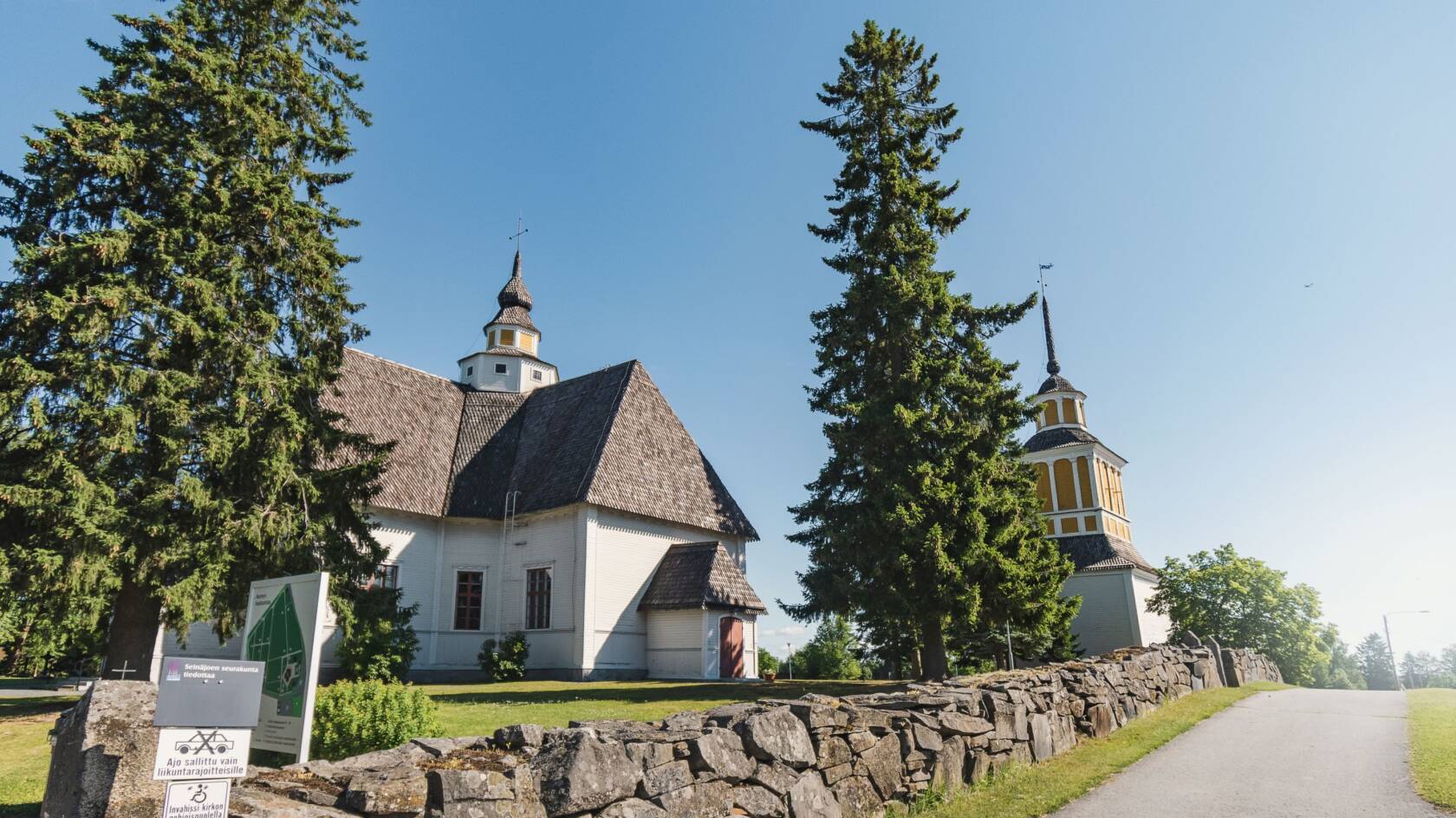
Nurmonjoentie 17, 60550 Nurmo
Open during events.
06 418 4500
On-call caretaker
Max 650 people
Accessibility
Nurmo church has an accessible elevator on the entrance on the left-hand side of the church (on the north-side/graveyard side) as well as an accessible WC on the backside of the church hall, to the left. On the chancel there is a wheelchair ramp leading to the altar. The church is also equipped with hearing loop, sound system and AV-devices.
On the other side of the church’s service building in Nurmonjoentie, there’s a normal WC and an accessible WC.
- Accessible space
- Accessible WC
- Hearing loop
- Parking space for people with reduced mobility
Reservations and inquiries
Get in touch with the Nurmo service office.
06 418 4371
Nurmo service office
About the church
In the early Middle Ages, Nurmo was part of the parish of Pohjankyrö. When Lapua became a parish in 1581, Nurmo was included in it as the village of Ylinurmo.
The people from Nurmo kept an illicit preaching house in 1727, a long church that could fit around 200 people. The cathedral chapter and the people from Lapua denied the Nurmo residents, who longed for a church and a priest, permission to establish a parish. A petition was presented in 1730, but to no avail. The people of Seinäjoki joined the project, and in 1765 the king granted their request. In the year 1766, the cathedral chapter gave the mandate to the first priest of Nurmo and Alaseinäjoki. The illicit preaching house was re-inaugurated as a church, and in 1770 a bell tower by Antti Hakola, a builder from alahärmä, was completed. The weather vane on the roof of the bell tower was made and donated by Gabriel Kaunismäki, a tenant farmer and blacksmith, in 1878.
Antti Hakola was called back to work when the preaching hall became too small, and construction of the new church began. The church’s foundation work and stone base were completed in 1778. When Antti Hakola passed away, his son Kaappo continued the construction work. The church was completed in 1779.
In 1816, Nurmo and Seinäjoki became a chapel parish of the Lapua parish. In the year 1863, Seinäjoki founded its own chapel parish within the Ilmajoki parish and in 1879, Nurmo became an independent parish. The first minister was Albert Emil Tallroth (later Honkajuuri), 1882–1890.
In 2009 came a merging of the parishes merged, and Nurmo became a chapel parish of the Seinäjoki parish.
Parish life in Nurmo is typical of Southern Ostrobothnia, and the church’s revivalist movements have made a significant contribution to it. In the history of the parish, a strong influence comes from the well-known preacher Niilo Kustaa Malmberg. Nurmo is, in fact, known as a revivalist district.
The church of Nurmo was renovated numerous times over the years. It was built next to the old preaching house, and it was surrounded by a small graveyard that has been repeatedly expanded.
The original windows are nowadays smaller, and the church was painted red. The church got its new colored exterior in 1913.
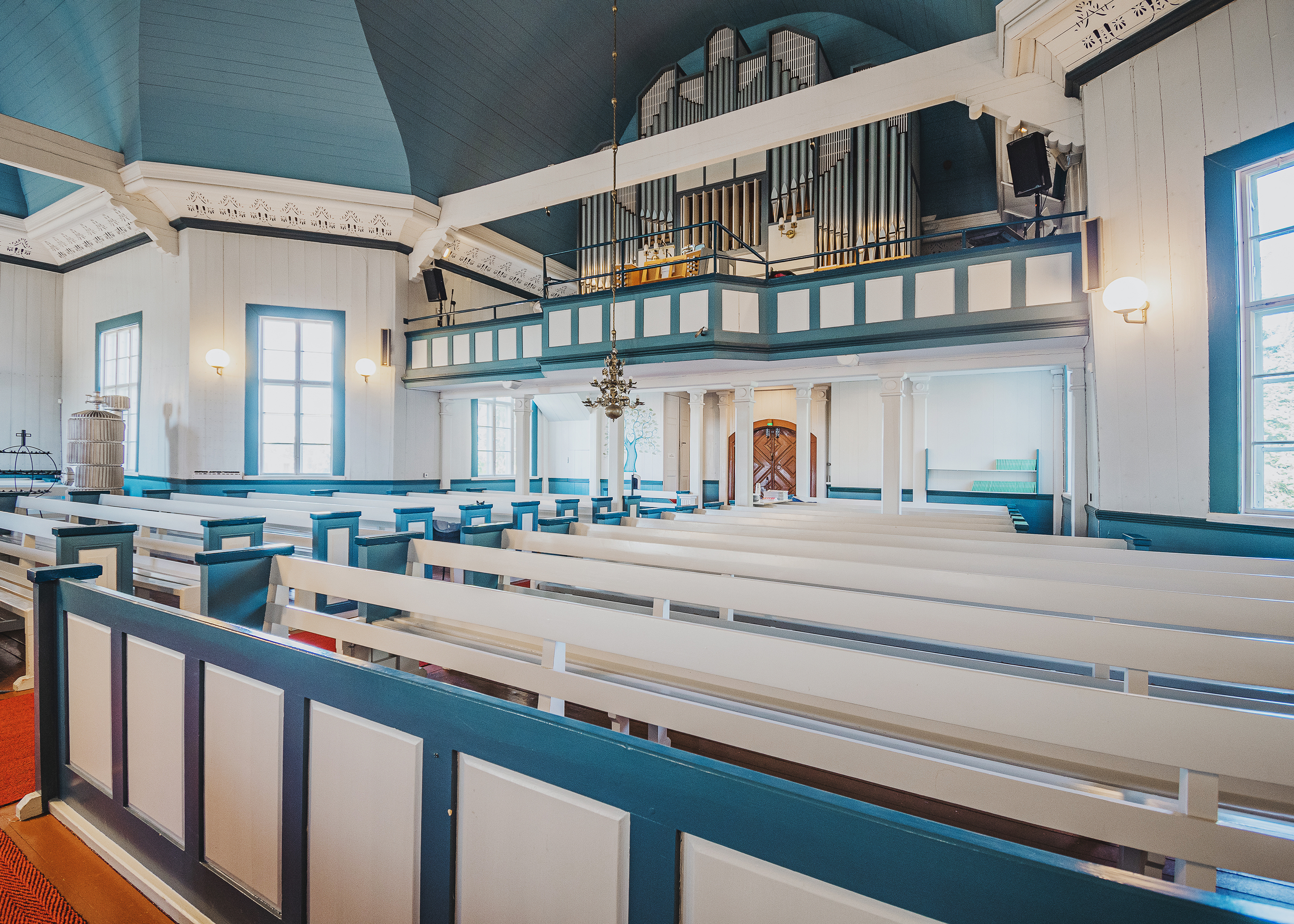
The internal height of the church from the floor to the central dome is 10 metres. The church’s hallways were built in 1825. The church has seating for 600 people.
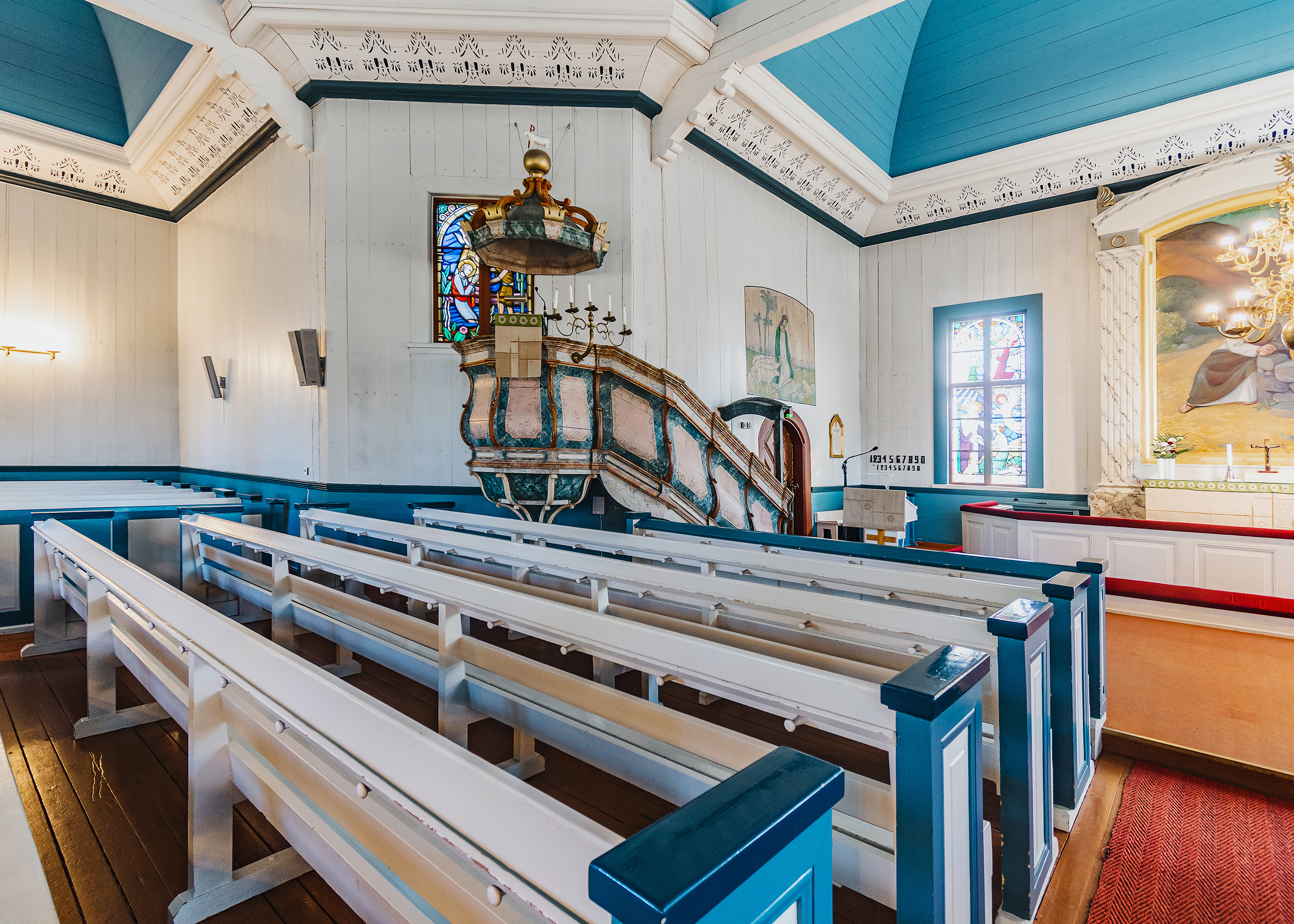
After long struggles, the church’s interior was brought back to its original appearance. The pulpit was built by Samuel Köhlströmin in 1782. The pulpit’s five-branched chandelier is from 1795. The first interior painting of the church was done by church painter Johan Tilen, whose models were the basis for border ornaments on the walls and the roof realised in 1787. The church painter Juho Koskiniemi painted the curtains to the windows, the ornaments on the upper parts of the walls, as well as the Kylväjä painting in 1844. The artist Frans Hiivanainen, in 1914, painted the Hyvä paimen and Tuhlaajapoika paintings.
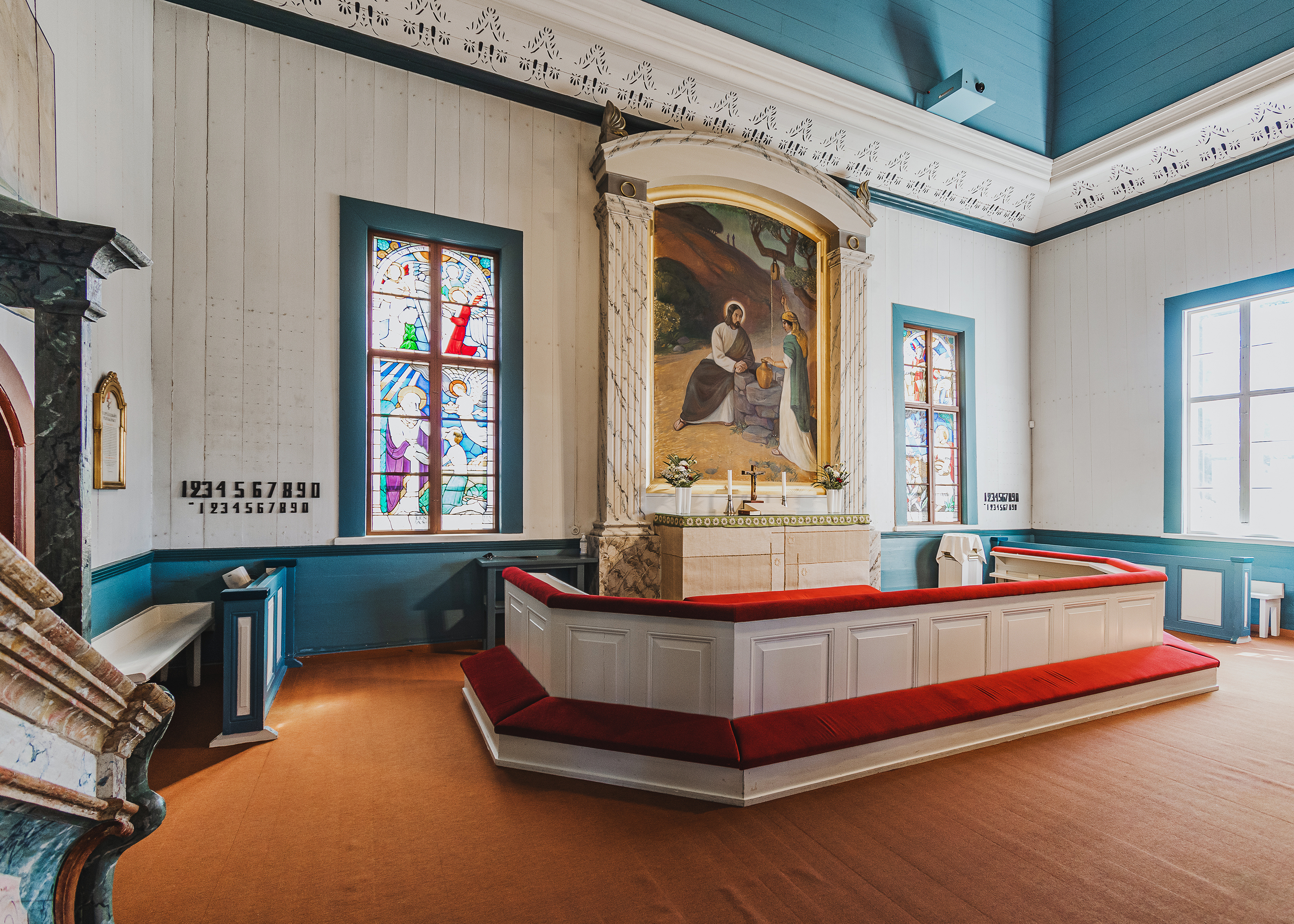
The altarpiece is a work of the artist Väinö Hämäläinen, Jesus and the Samaritan woman, from the year 1914.
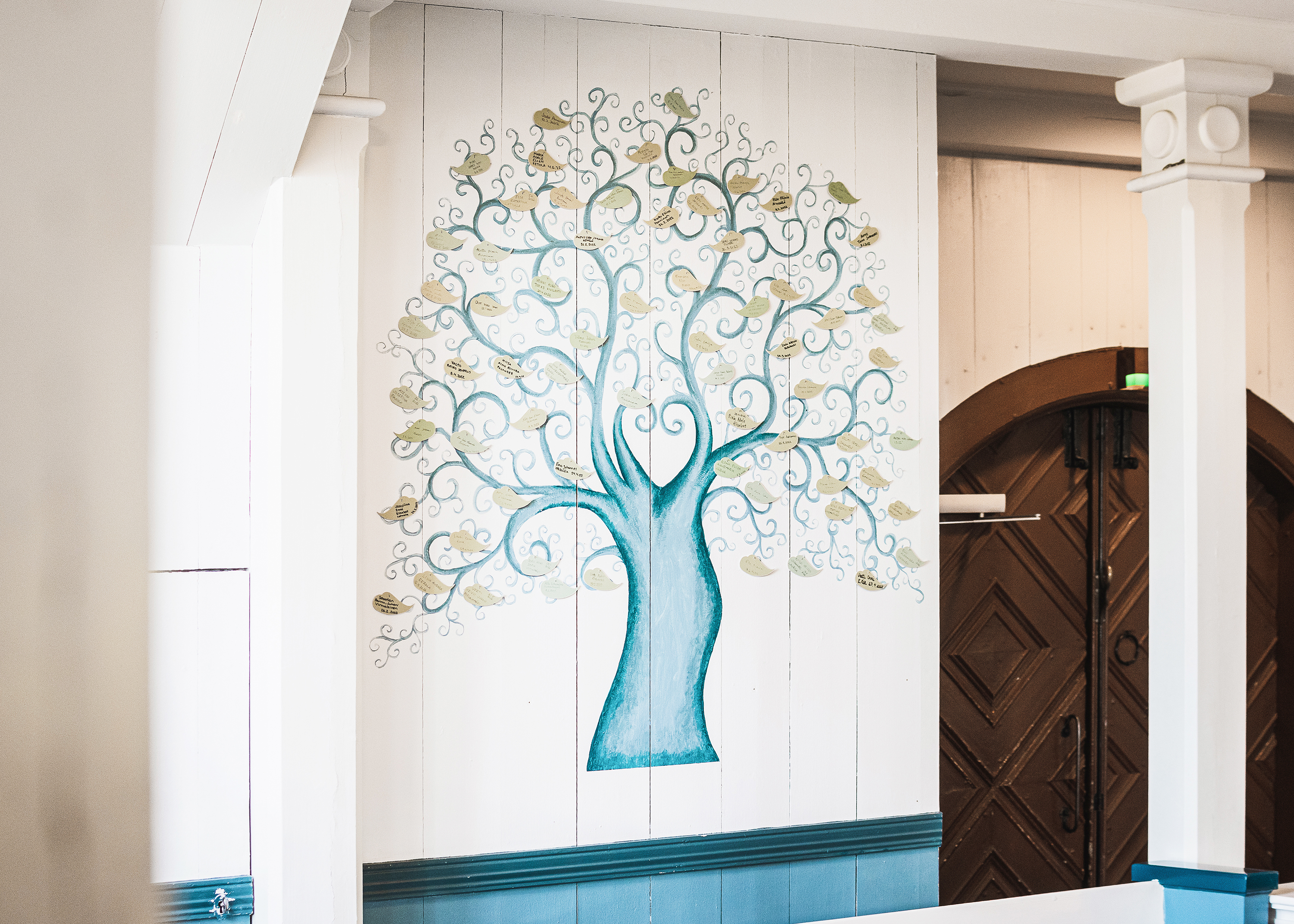
The glass painting on the altar wall was donated by the general director Mauri Honkajuuri in 1948. In the year 2016, the church’s collection was complemented by a painting of the christening tree near the west entrance, whose leaves have the names of the baptised children. The christening tree painted by Merja Lopi is an adaptation of the idea of the tree of life. According to church architecture rooted in theology, the west door of the church is the “Door of Christ”, through which we walk into the church and towards “The path of God”, eastwards. In the church hall, the baptismal font has also been in the vicinity of the east entrance. The journey towards the altar starts from the christening.
The church’s current organ is from 1984 and was built by the organ manufacturer Hans Heinrich. It has 25 stops, two pipes, and two sets of keyboards.
The church was renovated inside and out in 1979. During the restoration work, effort was made to preserve the church’s original appearance. During the same period, new church textiles designed by the artist Kerttu Vihko-Voipio were acquired. In the year 2015, the church sacristy was renovated, and the toilet facilities were upgraded.
The chapel close to the church now serves as a repository for the deceased. It was built in 1928. Next to the church is a military cemetery, which features, amongst other things, a memorial of the war of 1918, which was unveiled in 1921, an angelical statue made by Kalervo Kallio in 1951, as well as a memorial stone commemorating the great famine of the 1860s.
The losses caused by the wars are commemorated by 164 memorial crosses for the fallen heroes. In the Battle of Äyräpää on 5 March 1940, 39 men from Nurmo were killed in a single day.
On the outer wall of the bell tower stands a sculpture of a beggar boy, carved in 1840 by Heikki Mikkilä from Kuortane.
The History of the Nurmo Chapel Parish
To this day, the Nurmo chapel parish, which has its origins in a preaching hut erected without permission in 1727, is an important part of the parish life of the Seinäjoki district.
Nurmo is known for its heritage
The average age of people in Nurmo is just over 30. A strong increase in the population and, particularly, the influx of families into the area, as well as the expansion of new residential areas, have left their mark on parish life. The körtti parish look, which is known for its traditions, has started to get new nuances with the change of the century. Of the on vuosituhannen vaihteen myötä alkanut saada uusia vivahteita. The activities of children, youth and families have broadened and found new forms.
Traditionally, the Nurmo chapel parish has represented the typical Southern Ostrobothnian ecclesiastic life, to which the internal revivalist movements have largely impacted. The famous preacher Niilo Kustaa Malmberg’s influence has a place in the history of the Nurmo chapel parish. Therefore, Nurmo is known as a revivalist region.
The parish’s formation stages
Nurmo was in the early Middle Ages also part of the Pohjankyrö municipality, and when Lapua became a parish in 1582, Nurmo joined as a village of Ylinurmo.
The people from Nurmo held an illicit preaching house in 1727, a long church that could fit around 200 people. The cathedral chapter and the people from Lapua denied the Nurmo residents, who longed for a church and a priest, permission to establish a parish. A petition was presented in 1730, but to no avail. The people of Seinäjoki joined the project, and in 1765 the king granted their request. In the year 1766, the cathedral chapter gave the mandate to the first priest of Nurmo and Alaseinäjoki. The illicit preaching house was re-inaugurated as a church, and in 1770 a bell tower by Antti Hakola, a builder from alahärmä, was completed. The weather vane on the roof of the bell tower was made and donated by Gabriel Kaunismäki, a tenant farmer and blacksmith, in 1878.
Antti Hakola was called back to work when the preaching hall became too small, and construction of the new church began. The church’s foundation work and stone base were completed in 1778. When Antti Hakola passed away, his son Kaappo continued the construction work. The church was completed in 1779.
In 1816, Nurmo and Seinäjoki became a chapel parish of the Lapua parish. In the year 1863, Seinäjoki founded its own chapel parish within the Ilmajoki parish and in 1879, Nurmo became an independent parish. The first minister was Albert Emil Tallroth (later Honkajuuri), 1882–1890.
In 2009 came a merging of the parishes merged, and Nurmo became a chapel parish of the Seinäjoki parish.
About the church building
The church of Nurmo was renovated numerous times over the years. It was built next to the old preaching house, and it was surrounded by a small graveyard that has been repeatedly expanded.
The original windows are nowadays smaller, and the church was painted red.
The internal height of the church from the floor to the central dome is 10 metres. The church’s hallways were built in 1825. The church has seating for 600 people.
After long struggles, the church’s interior was brought back to its original appearance. The pulpit was built by Samuel Köhlströmin in 1782. The pulpit’s five-branched chandelier is from 1795. The first interior painting of the church was done by church painter Johan Tilen, whose models were the basis for border ornaments on the walls and the roof realised in 1787. The church painter Juho Koskiniemi painted the curtains to the windows, the ornaments on the upper parts of the walls, as well as the Kylväjä painting in 1844. The artist Frans Hiivanainen, in 1914, painted the Hyvä paimen and Tuhlaajapoika paintings.
The altarpiece is a work of the artist Väinö Hämäläinen, Jesus and the Samaritan woman, from the year 1914.
The glass painting on the altar wall was donated by the general director Mauri Honkajuuri in 1948. The church’s current organ is from 1984 and was built by the organ manufacturer Hans Heinrich.
The church was renovated inside and out in 1979. During the restoration work, effort was made to preserve the church’s original appearance. During the same period, new church textiles designed by the artist Kerttu Vihko-Voipio were acquired. In the year 2015, the church sacristy was renovated, and the toilet facilities were upgraded.
The church’s exterior got its current light colour in 1913.
The chapel close to the church now serves as a repository for the deceased. It was built in 1928. Next to the church is a military cemetery, which features, amongst other things, a memorial of the war of 1918, which was unveiled in 1921, an angelical statue made by Kalervo Kallio in 1951, as well as a memorial stone commemorating the great famine of the 1860s.
The losses caused by the wars are commemorated by 164 memorial crosses for the fallen heroes. In the Battle of Äyräpää on 5 March 1940, 39 men from Nurmo were killed in a single day.
On the outer wall of the bell tower stands a sculpture of a beggar boy, carved in 1840 by Heikki Mikkilä from Kuortane.
 https://seinajoenseurakunta.fi/wp-content/uploads/sites/7/2026/03/nurmon_kirkko_Sarah_Senf-3018.jpg
 https://seinajoenseurakunta.fi/wp-content/uploads/sites/7/2026/03/nurmon_kirkko_Sarah_Senf-3021.jpg
 https://seinajoenseurakunta.fi/wp-content/uploads/sites/7/2026/03/nurmon_kirkko_Sarah_Senf-3026.jpg
 https://seinajoenseurakunta.fi/wp-content/uploads/sites/7/2026/03/nurmon_kirkko_Sarah_Senf-3002.jpg