
Peräseinäjoki church
Kirkkotie 2, 61100 Peräseinäjoki
Open during events.
040 719 2526
On-call caretaker
Max 1000 people
Accessibility
The Peräseinäjoki church has wheelchair ramps for the door on the side of the heroes-graveyard (north-side) as well as an accessible WC on the main lobby. The church is also equipped with a hearing loop and a sound system.
- Accessible WC
- Hearing loop
- Parking space for people with reduced mobility
Reservations and inquiries
Get in touch with the Peräseinäjoki service office.
06 418 4411
Peräseinäjoki service office
About the church
In the early Middle Ages, Peräseinäjoki was first part of the Pohjankyrön church municipality, and later of Ilmajoki. Peräseinäjoki became a chapel parish of Ilmajoki Parish in 1798, and was an independent parish from 1882 to the year 2005, with the union with Seinäjoki.
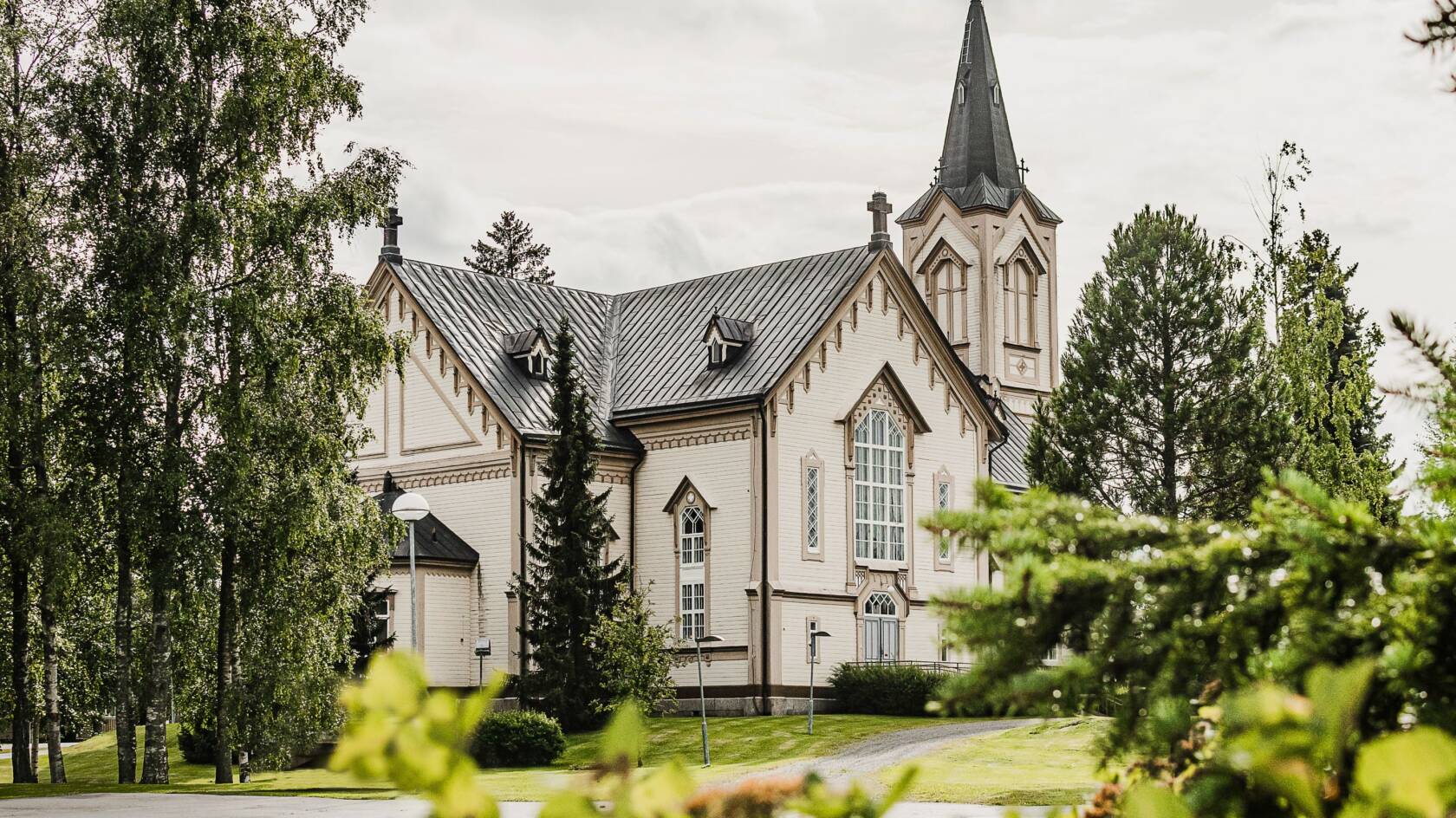
The first construction work of the church began in 1784 and was already finished before the permissions for the church were acquired in 1798. The church towers were moulded in 1799 and 1859. To this day, they still invite people to the church.
The present church, built in 1892, is called Pyhän Paavali church. Work began on the church’s stone plinth and foundations, even though official permission had not yet been granted. They were designed by the county architect Ivar Aminoff, and Juho Karjanlahti from Haapajärvi acted as master builder. The pulpit and lecterns were made by Sameli Ketola.
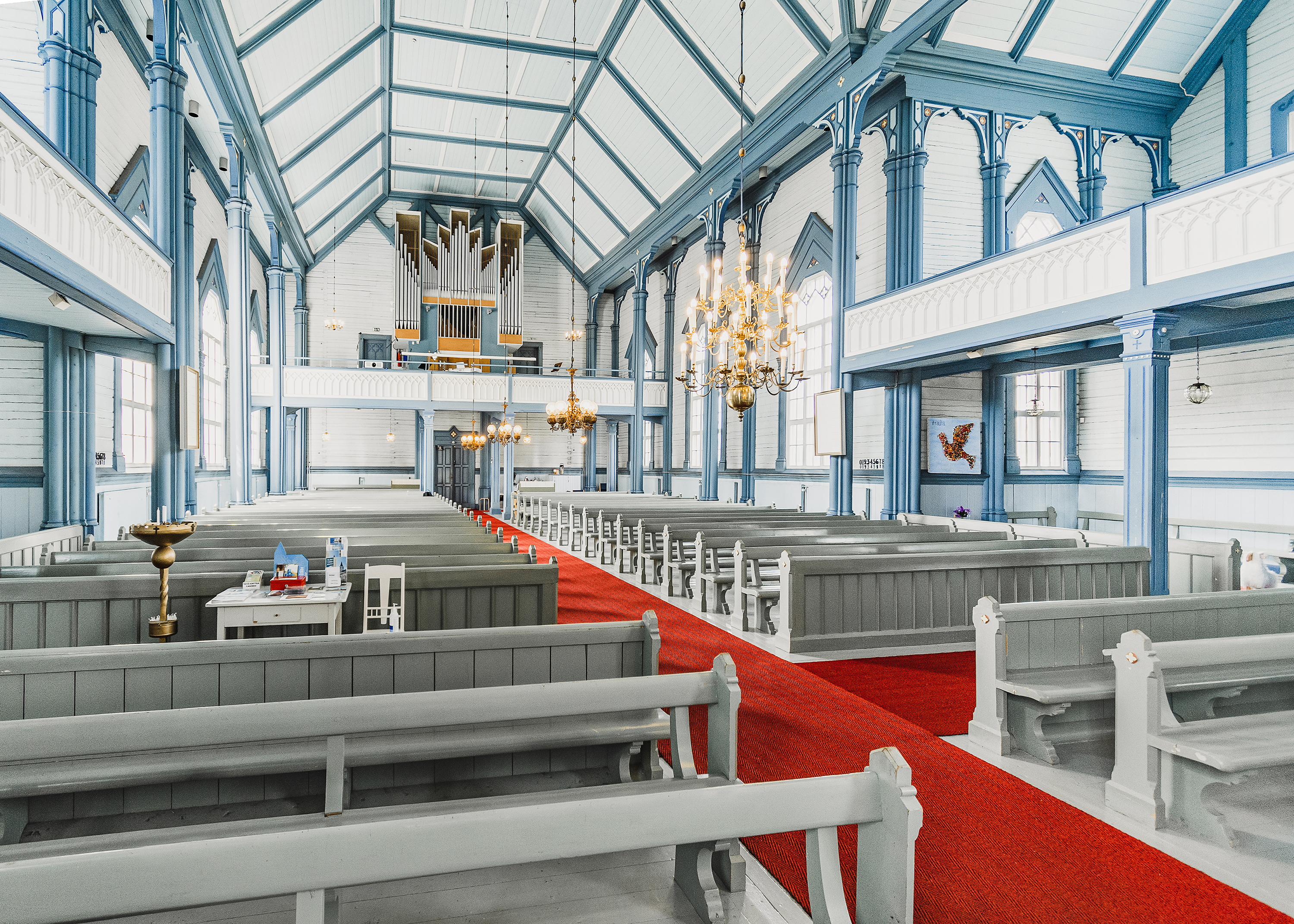
The wooden church, representative of a nikkarityyli style, a cruciform church with three galleries. It measures from east to west 31 metres, 23,3 metres of width from the cross and ristien kohdalta and 14,5 metres from the flat section. The cross is 11,5 m wide, and the church is 21,3 m high. The measures are all internal, and the vestibule is not considered. The eastern end of the church features a sacristy. The church tower, a bell tower, is 38 m tall. The church can fit almost 1.000 hearers.
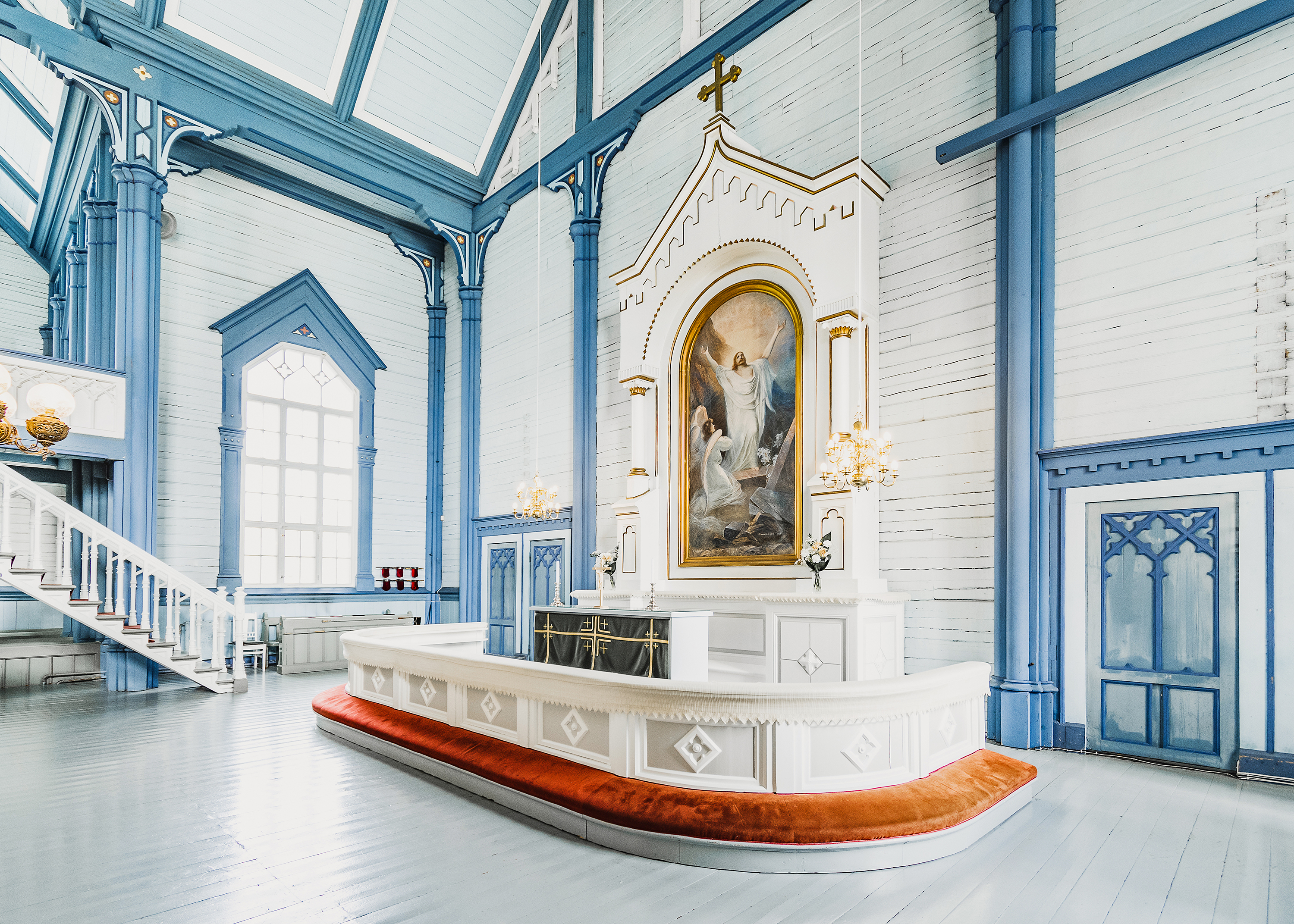
The altarpiece depicting the resurrection of Christ dates from 1905. It was painted by Aleksandra Frosterus-Såltin, an artist from Vaasa.
The first 15-stop organ for the church was acquired in 1897 and repaired in 1921. The current mechanical organ was built by the Kangasala organ manufacturer in 1964. It has 22 stops.
The chandeliers in the central aisle date from the early 20th century. They were originally candlesticks. The chandeliers on the altar were donated by the J.G. Annala Foundation in the mid-1960s. The seven-branched candlestick on the altar was received by Maria and Juho Lammi in 1920.
A figure of a poor old man crafted by Heikki Mikkilä holds out his hands next to the main door. Puuseppä Sulo Lohjelmin käsialaa the baptismal table comes from the hands of the carpenter Sulo Lohjemi. The baptismal and communion candlesticks are by the blacksmith Toivo Puukka.
Beneath the south gallery there is a votive ship from the end of the 19th century, a scale model of a sailing vessel donated to the church. Those were donated, for example, by people who had survived shipwrecks, and they are rare in inland churches. Matti Laine repaired the ship by the name of Teekla, whose author is believed to be Johan Jaakonpoika Valkava.
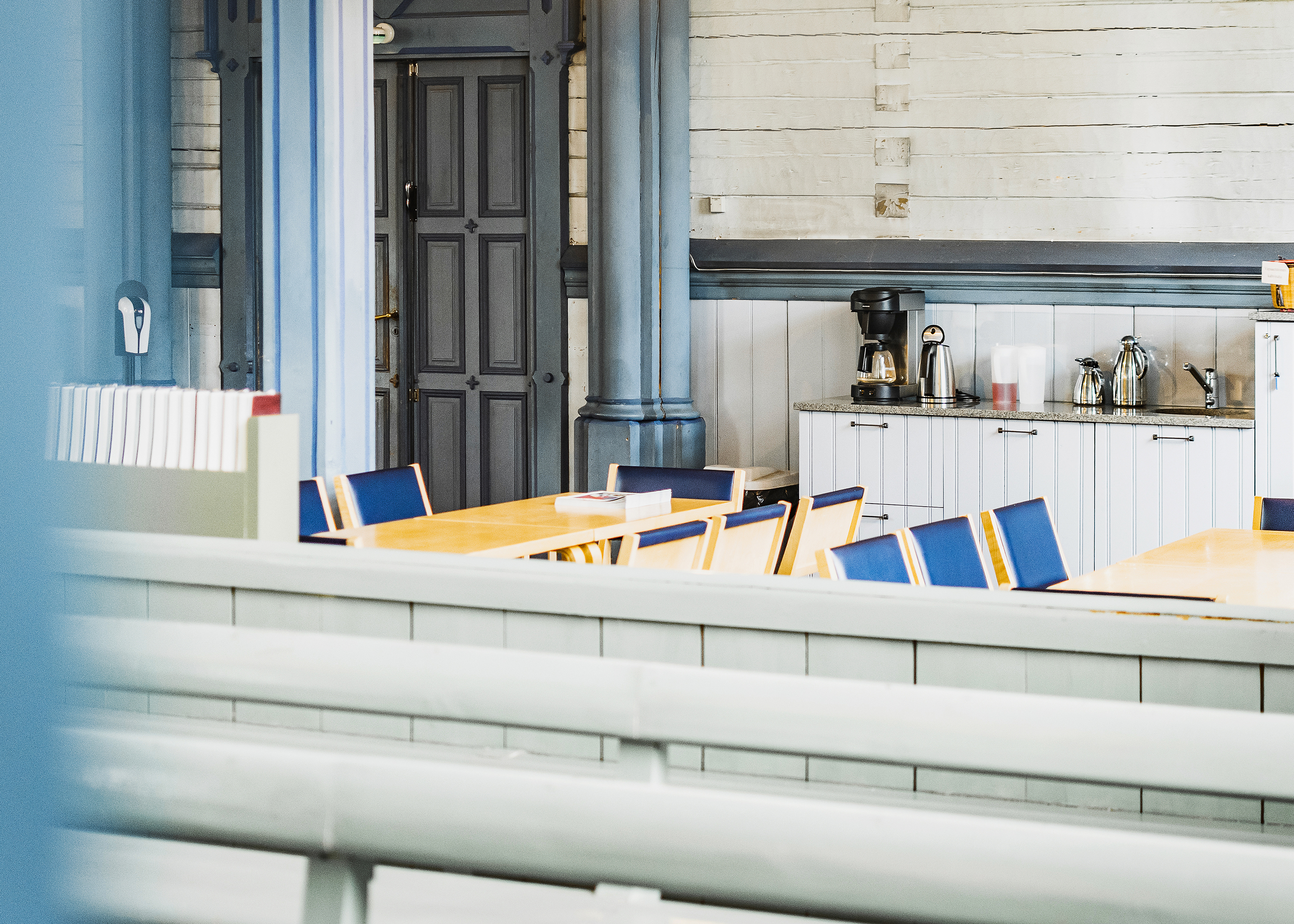
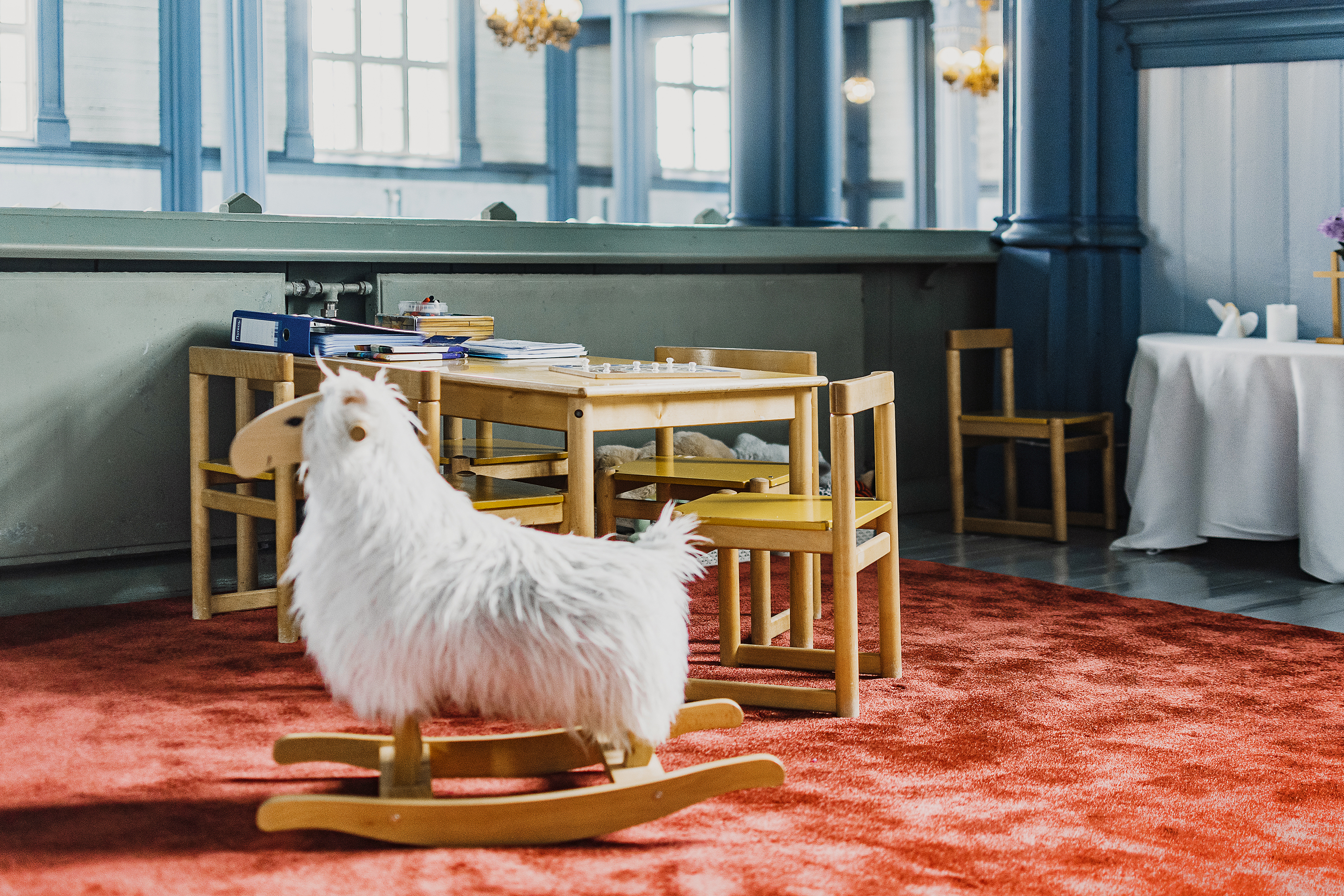
Vuonna 2022 kurikkalainen Perinnerakentaja Leo Lönnroth Oy toteutti kirkkoon tilat kuorolle, bändille ja kirkkokahvituksille sekä lasten leikkitilan laajennuksen.
The parish hall, built in 1972 and situated close to the church, was renovated in 2007. The corner window of the extended hall now opens to a view of the church and the military cemetery.
In addition to the soldiers of 1918, 223 soldiers who fell in the Winter War and Continuation War have found their final resting place in the military cemetery. The memorial to the fallen heroes was sculpted by Kalervo Kallio in 1953.
The history of the Peräseinäjoki chapel parish
The first construction work of the church began in 1784 and was already finished before the permissions for the church were acquired, in 1798.
The stages of the formation of the parish
In the early Middle Ages, Peräseinäjoki belonged to the church municipality of Pohjankyrö, from which Ilmajoki separated to become an independent parish in 1532. The Ilmajoki chapel parish was established in Peräseinäjoki in 1798, and from 1882 it was an independent parish until its merger with Seinäjoki in 2005. Since then, the residents of the Peräseinäjoki area have belonged to the Seinäjoki parish. Now Peräseinäjoki is once again one of the functionally independent chapel parishes within the Seinäjoki parish.
The activity of the chapel parish nowadays
On the chapel parish area, more than 3,000 members of the parish currently live. The chapel parish has shaped a warm religious community of its own and provides local residents with all the basic functions and services of a parish. The chapel council and the chapel parish staff, under the leadership of the senior chaplain, are responsible for its operations.
About the church building
The first construction work of the church began in 1784 and was already finished before the permissions for the church were acquired in 1798. The church towers were moulded in 1799 and 1859.
The present church, built in 1892, is called Pyhän Paavali church. Work began on the church’s stone plinth and foundations, even though official permission had not yet been granted. They were designed by the county architect Ivar Aminoff, and Juho Karjanlahti from Haapajärvi acted as master builder. The pulpit and lecterns were made by Sameli Ketola.
The wooden church, representative of a nikkarityyli style, is a cruciform church with three galleries. It measures from east to west 31 metres, 23,3 metres of width from the cross and ristien kohdalta and 14,5 metres from the flat section. The cross is 11,5 m wide, and the church is 21,3 m high. The measures are all internal, and the vestibule is not considered. The eastern end of the church features a sacristy. The church tower, a bell tower, is 38 m tall. The church can fit almost 1.000 hearers.
The altarpiece depicting the resurrection of Christ dates from 1905. It was painted by Aleksandra Frosterus-Såltin, an artist from Vaasa.
The first 15-stop organ for the church was acquired in 1897 and repaired in 1921. The current mechanical organ was built by the Kangasala organ manufacturer in 1964. It has 22 stops.
The chandeliers in the central aisle date from the early 20th century. They were originally candlesticks. The chandeliers on the altar were donated by the J.G. Annala Foundation in the mid-1960s. The seven-branched candlestick on the altar was received by Maria and Juho Lammi in 1920.
A figure of a poor old man crafted by Heikki Mikkilä holds out his hands next to the main door. Puuseppä Sulo Lohjelmin käsialaa the baptismal table comes from the hands of the carpenter Sulo Lohjemi. The baptismal and communion candlesticks are by the blacksmith Toivo Puukka.
Beneath the south gallery there is a votive ship from the end of the 19th century, a scale model of a sailing vessel donated to the church. Those were donated, for example, by people who had survived shipwrecks, and they are rare in inland churches. Matti Laine repaired the ship by the name of Teekla, whose author is believed to be Johan Jaakonpoika Valkava.
The parish hall, built in 1972 and situated close to the church, was renovated in 2007. The corner window of the extended hall now opens to a view of the church and the military cemetery.
In addition to the soldiers of 1918, 223 soldiers who fell in the Winter War and Continuation War have found their final resting place in the military cemetery. The memorial to the fallen heroes was sculpted by Kalervo Kallio in 1953.
 https://seinajoenseurakunta.fi/wp-content/uploads/sites/7/2026/03/peraseinajoen_kirkko_Sarah_Senf-3961.jpg
 https://seinajoenseurakunta.fi/wp-content/uploads/sites/7/2026/03/peraseinajoen_kirkko_Sarah_Senf-3965.jpg
 https://seinajoenseurakunta.fi/wp-content/uploads/sites/7/2026/03/peraseinajoen_kirkko_Sarah_Senf-3997.jpg
 https://seinajoenseurakunta.fi/wp-content/uploads/sites/7/2026/03/peraseinajoen_kirkko_Sarah_Senf-3989.jpg
 https://seinajoenseurakunta.fi/wp-content/uploads/sites/7/2026/03/peraseinajoen_kirkko_Sarah_Senf-3976.jpg