
Törnävä church
Ruukintie 157, 60200 Seinäjoki
Open during events.
06 418 4260
On-call caretaker
Max 500 people
Accessibility
The Törnävä church has a wheelchair ramp on the right side of the entrance. The church is equipped with hearing loop and a sound system. The graveyard’s service building (on the b-parking lot, between the cemetery chapel and the church) has an accessible WC and ramp.
- Accessible WC
- Hearing loop
- Parking space for people with reduced mobility
Equipment
- Sound system
- Wifi
Reservations and inquiries
Get in touch with the Seinäjoki service.
06 418 4901
Seinäjoki service office
About the church
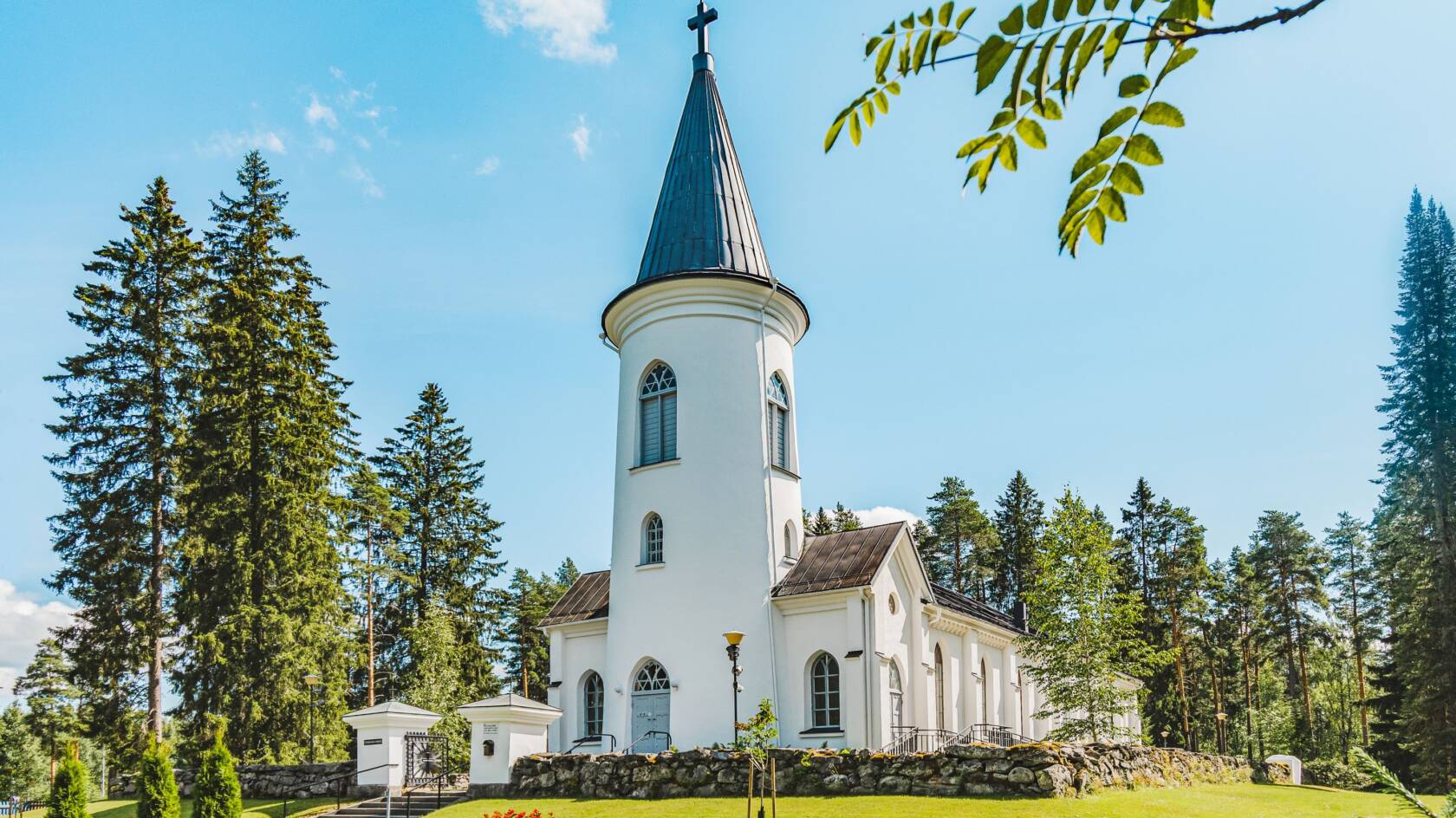
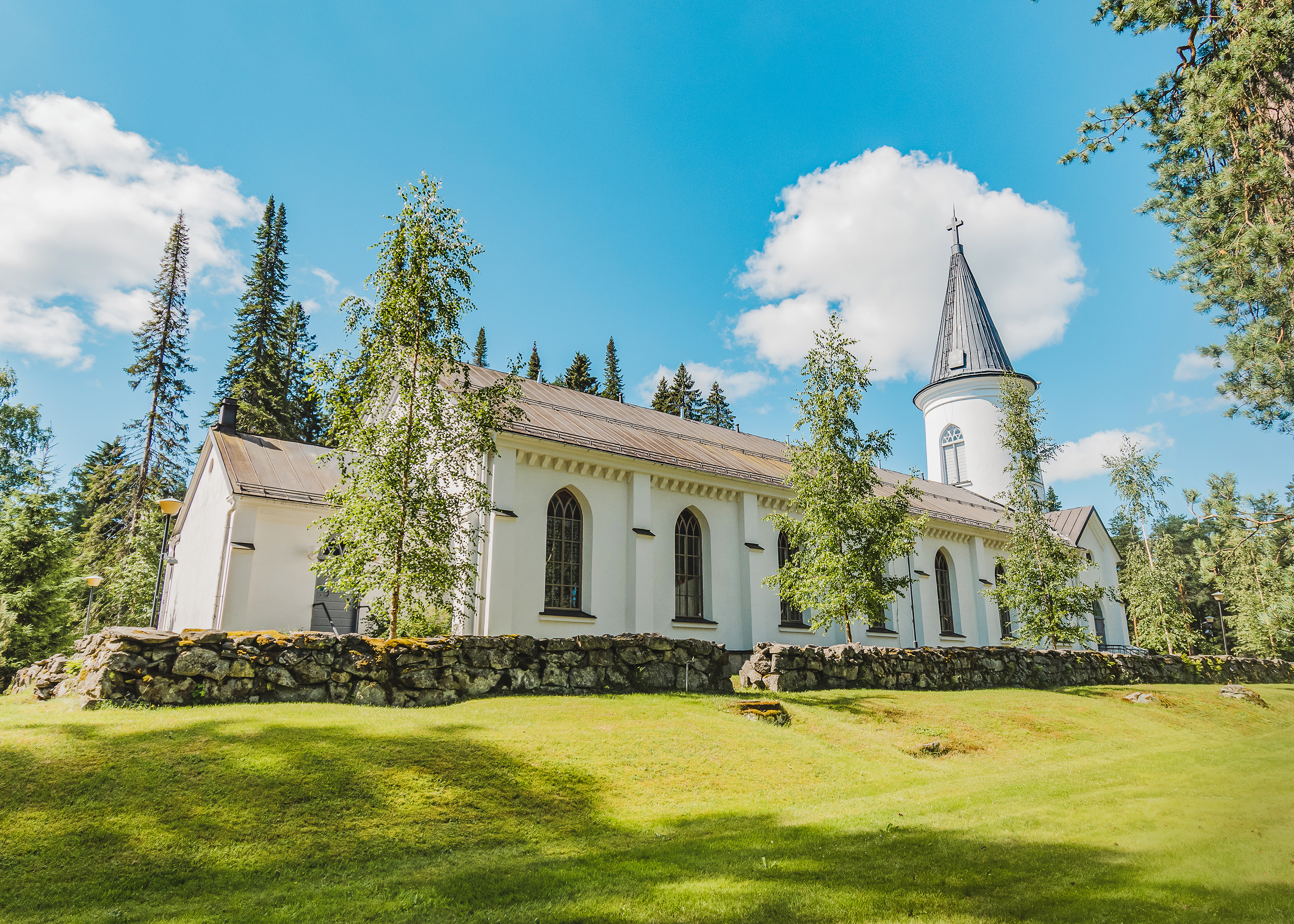
Seinäjoki’s first church of its own – after the construction of Lakeuden Risti, it received the name of Törnävä church – was built by the gunpowder manufacturer Östermyra for powder storage in the year 1827. When the gunpowder production ended and the storage became unnecessary, it was purchased by Gustav August Wasastjerna, the then owner of Östermyra Manor, at an auction.
He also played a key role in Seinäjoki’s secession from the Lapua chapel parish, which it had formed together with Nurmo, and, following two applications, was granted permission to establish its own chapel parish within the Ilmajoki parish in 1863.
Plans for the church’s renovation had been drawn up even before permission was granted to establish the chapel parish, and the work progressed rapidly, so that the church was consecrated in 1864, at the same time as its first resident priest, the chaplain Salomon Hirvinen, was assigned to it.
The renovation work plans were drawn by the county architect C.A.Setterberg. The watchtower of the gunpowder store was raised considerably when it was converted into the church’s bell tower. A sacristy was built at the east end.
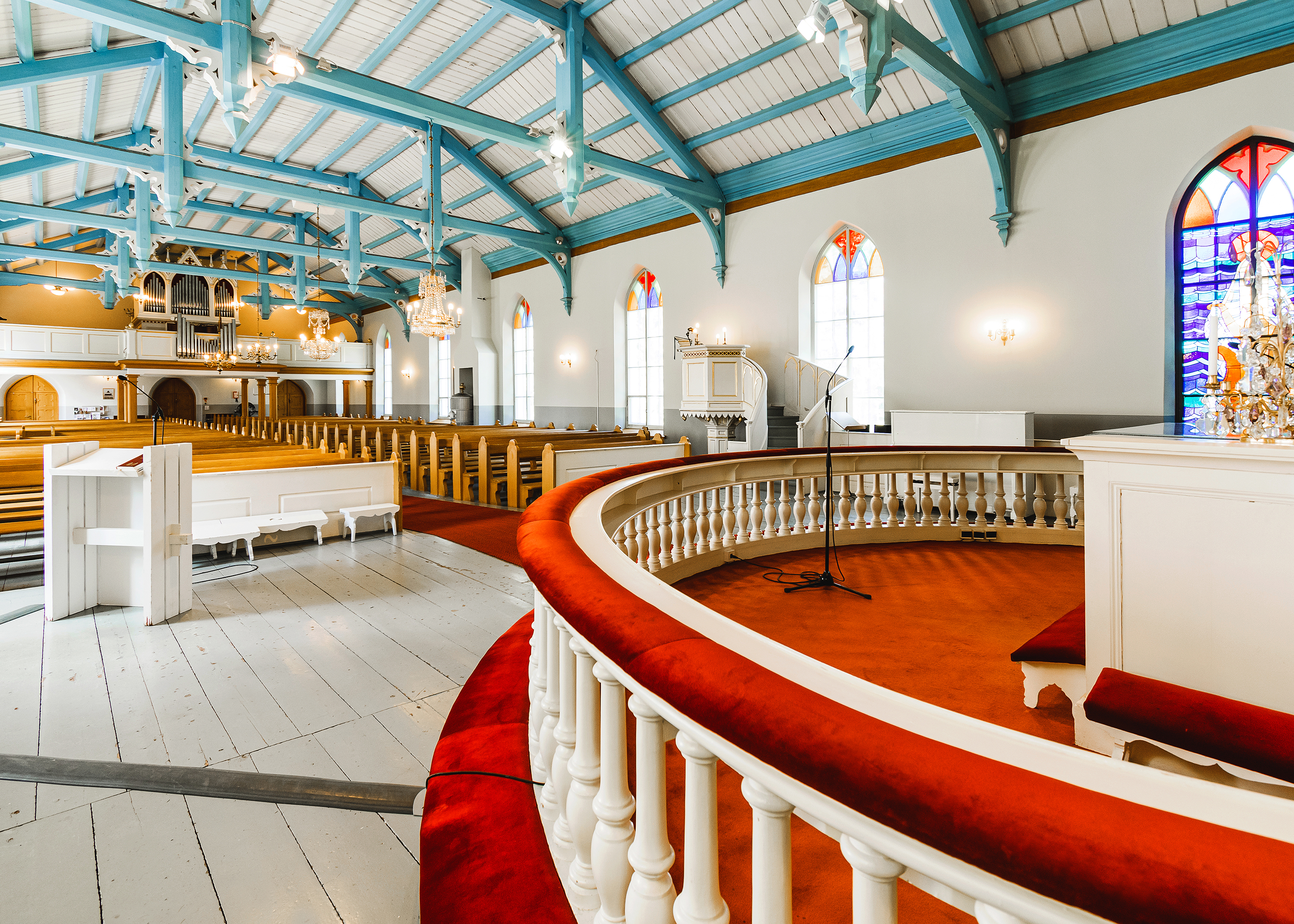
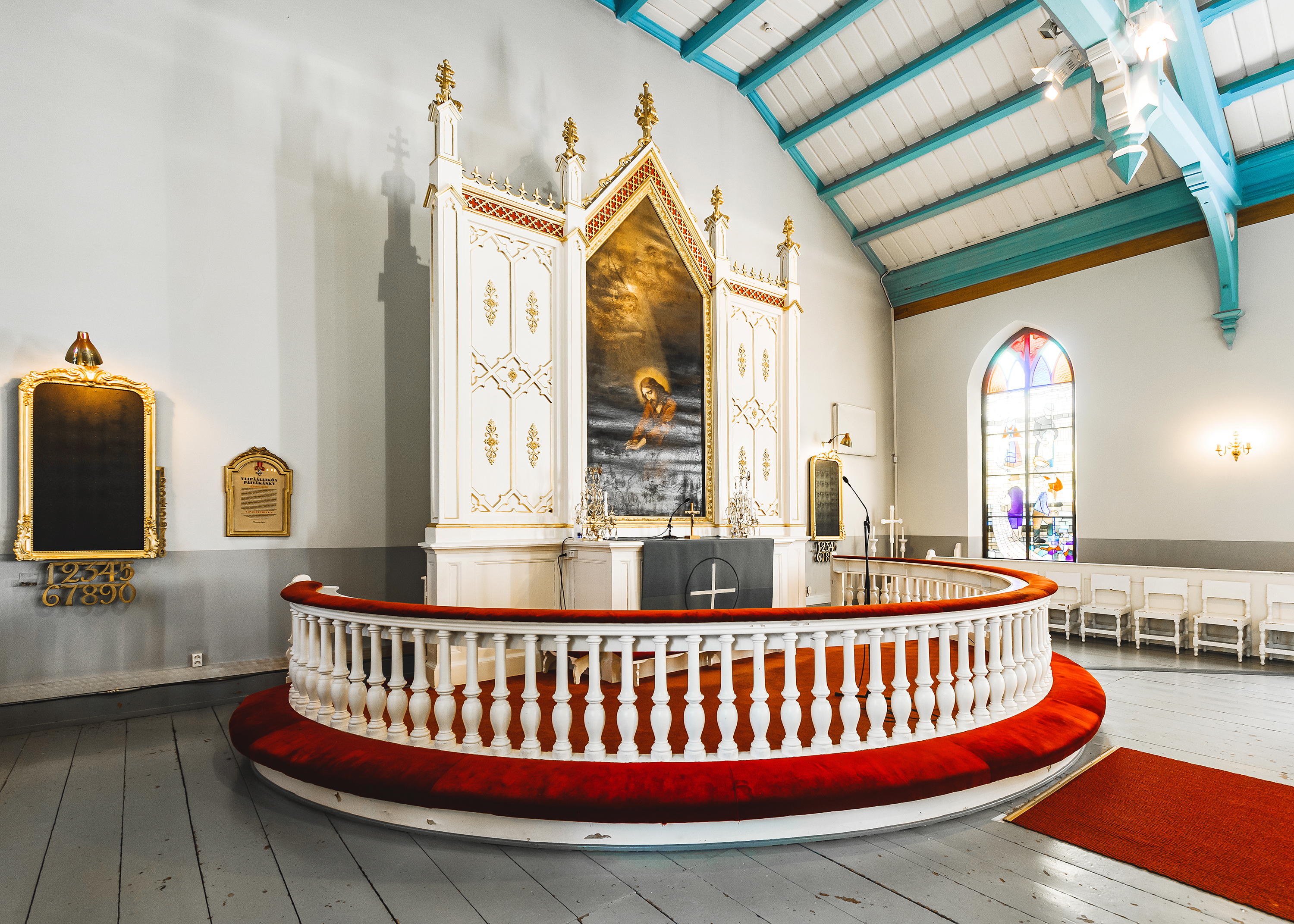
The altarpiece ”Jeesus Getsemanessa”, from 1877, is the first altar painting done by Aleksandra Frosterus-Såltini, an architect from Vaasa.
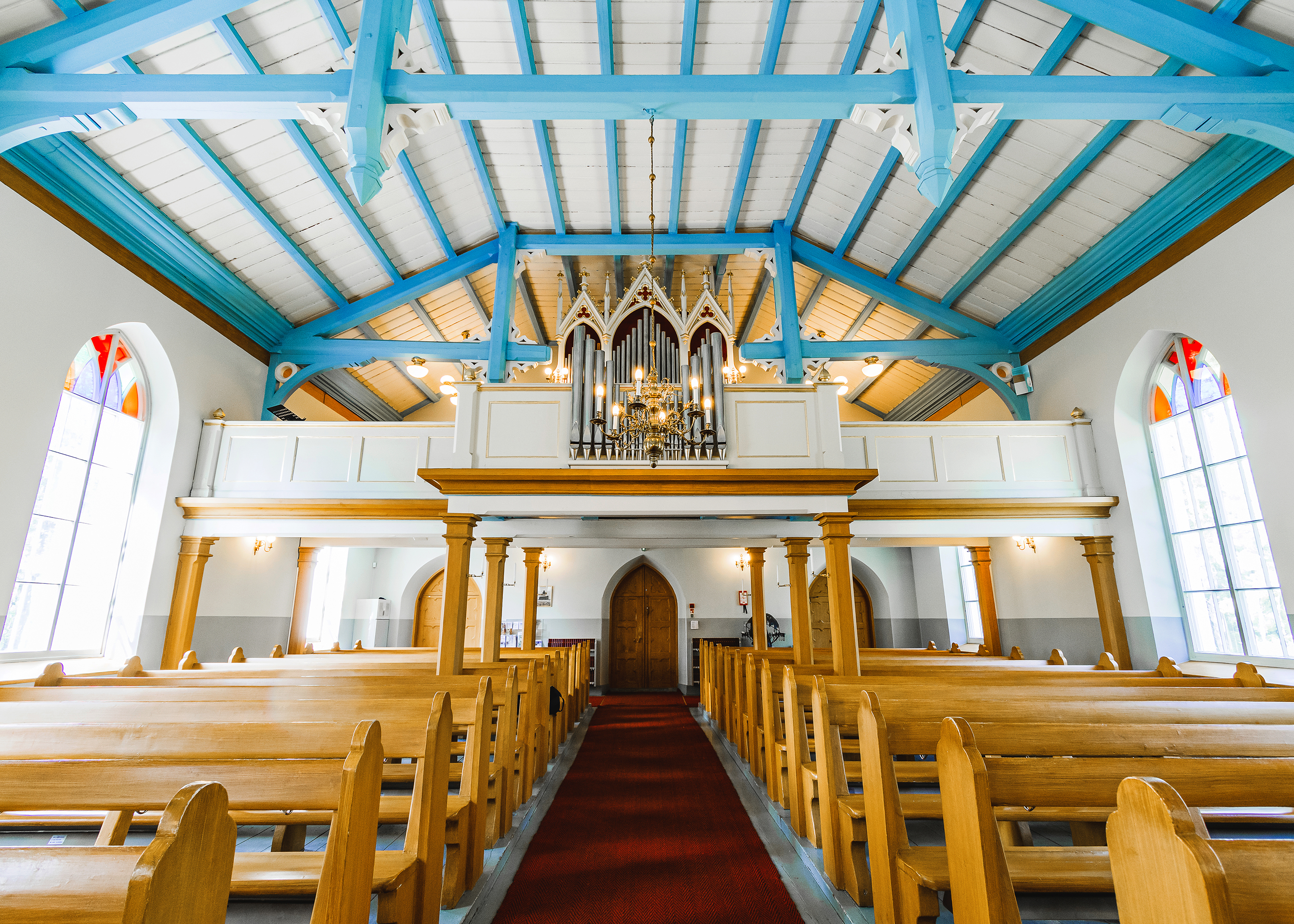
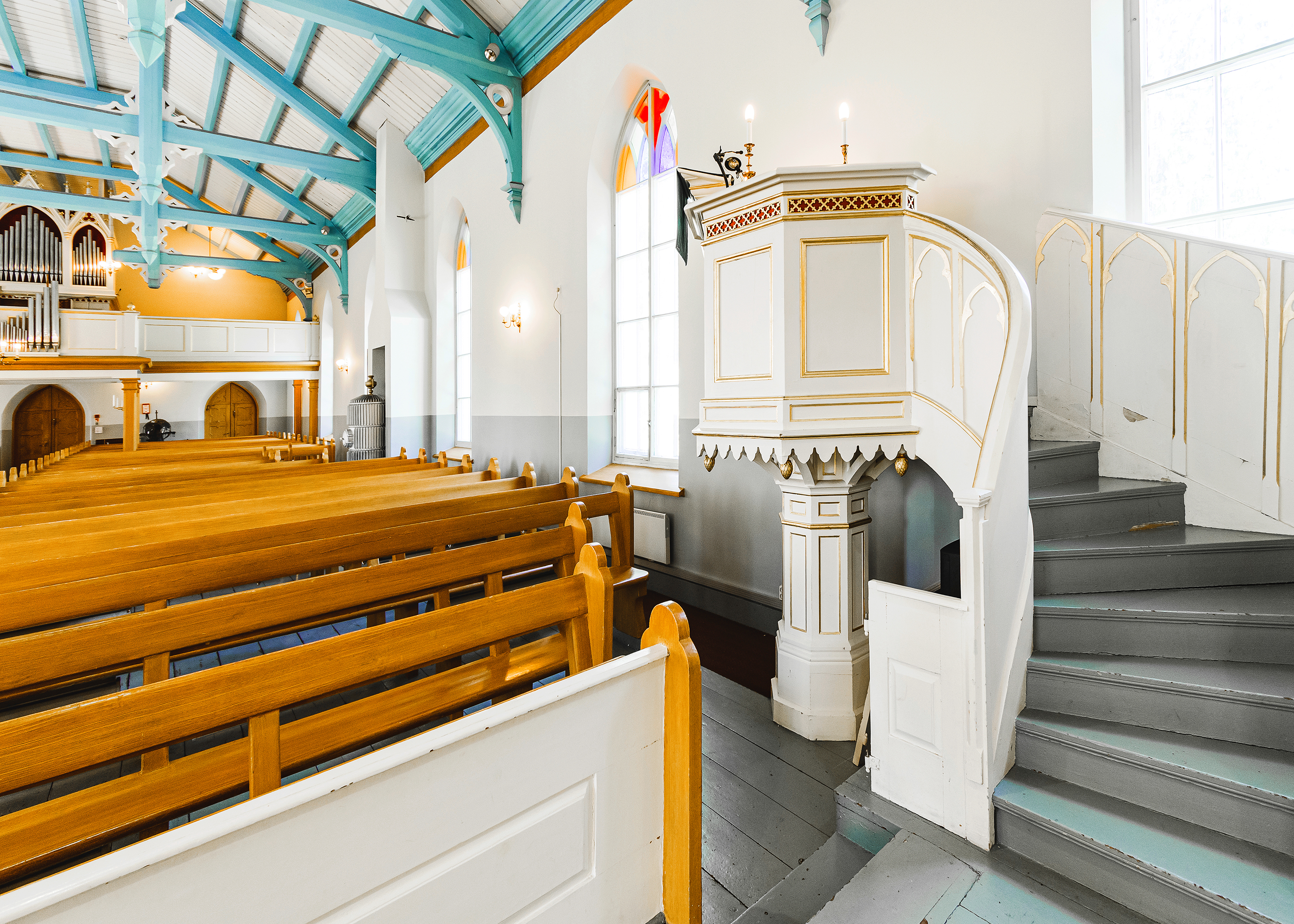
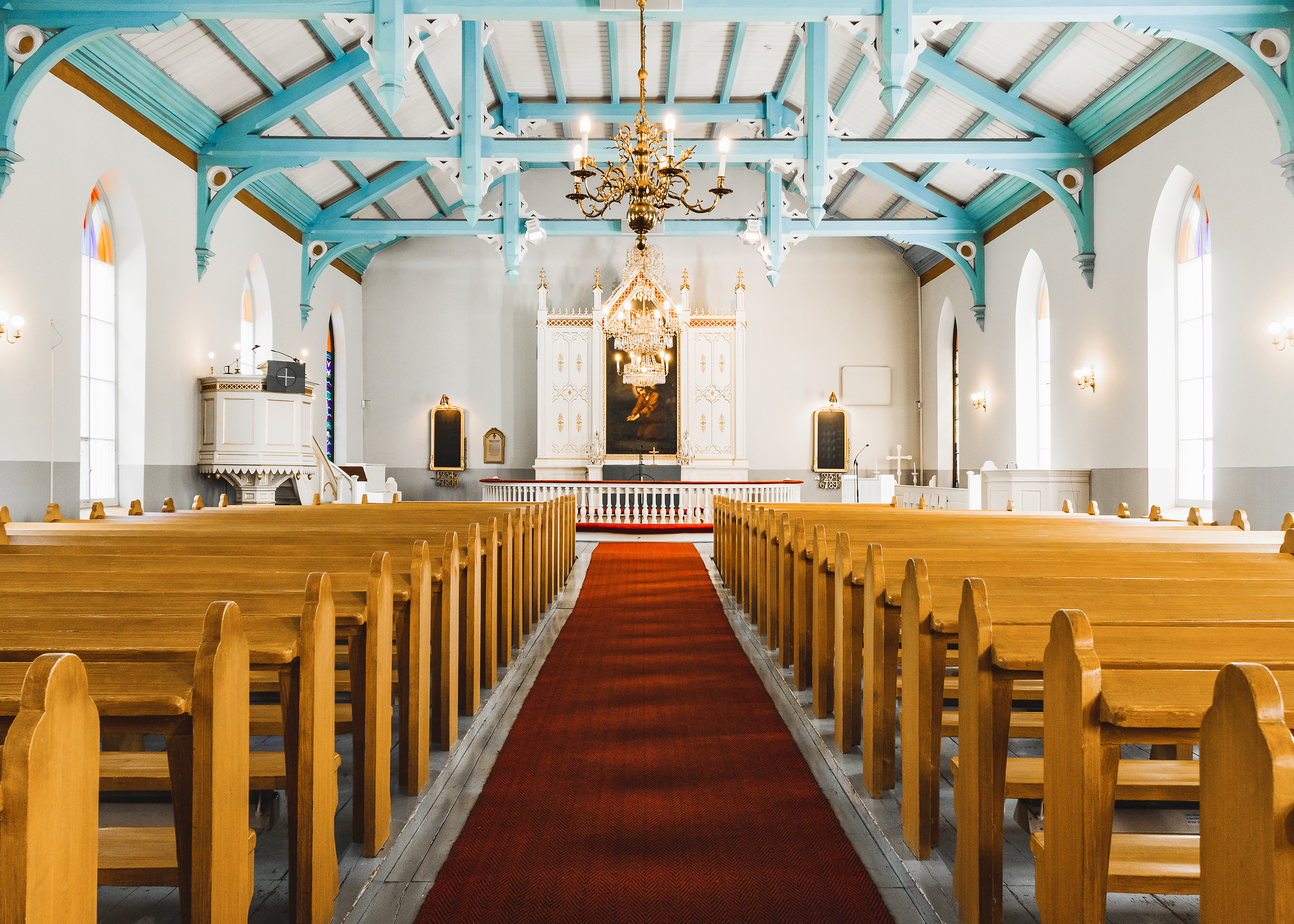
The structures of the ornate altarpiece and pulpit, as well as the pointed-arch windows and doorways, characterise the church’s architecture as predominantly Gothic. The benches and the rose-themed decorations on the roof’s supporting structure are also characteristic of the style.
The crucifer-themed continues also in the original organ frame dating from 1904. The frame was retained in the current 21-stop organ, which was built in the 1960s. The organ’s action is mechanical, and the console is fitted with an electrified stop action.
The church and the organ loft have seating for around 550 people.
A number of repairs have been carried out on the church over the years. In 1986, electric heating was installed in the church, including, amongst other things, bench heaters. The stoves in the nave have been retained as part of the interior. The entire nave was repainted in its original colours, the benches were refinished, and the gold leaf on the decorative paintings was restored.
The exterior of the church was painted in 1989 and the roof of the tower, including the cross, was replaced in 1997.
In 2022, Leo Lönnroth Oy, a Kurikka-based company specialising in traditional construction, fitted toilet facilities for church visitors, which are also accessible for people with disabilities.
A graveyard was established around the Törnävä Church when the chapel parish was founded in 1863. The graveyard has been expanded in three phases. In the military graveyard are buried 166 people. Those who fell in the War of Independence in 1918 are buried at the western end of the cemetery. Eight of them were from Seinäjoki, and 41 were unidentified soldiers who were brought to Seinäjoki for identification, as the headquarters was located in the town.
The War of Independence memorial was unveiled in 1921, and the memorial to the Winter War and Continuation War in 1952. “Rukoileva sotilas” was sculpted by Oskari Jauhiainen. The cemetery also contains a section for those who fell for their beliefs, the memorial to which was unveiled in 1950.
Near the Törnävä Church, there is also a chapel and crematorium, completed in 1979, which was designed by Arkkitehtitoimisto Heikki Taskinen Oy.
Next to the cemetery chapel is the urn cemetery area, the memorial for which was designed by the parish’s head of the park department, Eero Virtaniemi. He also drew up the environmental plan for the cemetery chapel.
 https://seinajoenseurakunta.fi/wp-content/uploads/sites/7/2026/03/tornavan_kirkko_DSC3107.jpg
 https://seinajoenseurakunta.fi/wp-content/uploads/sites/7/2026/03/tornavan_kirkko_DSC3104.jpg
 https://seinajoenseurakunta.fi/wp-content/uploads/sites/7/2026/03/tornavan_kirkko_DSC3103.jpg
 https://seinajoenseurakunta.fi/wp-content/uploads/sites/7/2026/03/tornavan_kirkko_DSC3102.jpg
 https://seinajoenseurakunta.fi/wp-content/uploads/sites/7/2026/03/tornavan_kirkko_DSC3097.jpg
 https://seinajoenseurakunta.fi/wp-content/uploads/sites/7/2026/03/tornavan_kirkko_DSC3115.jpg